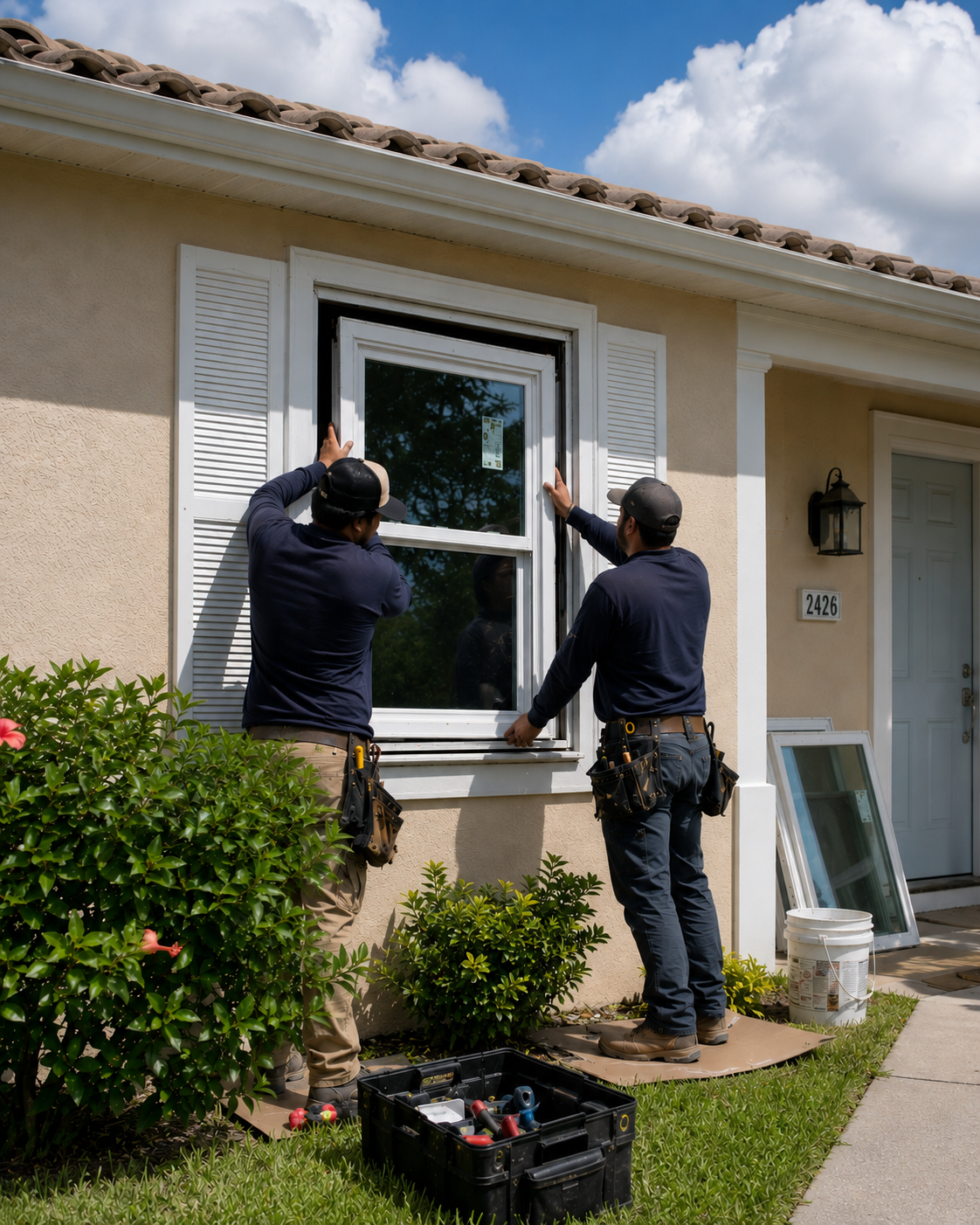
My Safe Florida Home grants up to $10,000 for impact-rated windows, shutters, and roof improvements. The 2026-2027 state budget proposes $480 million to clear the grant backlog plus $109 million in recurring annual funds. Pair the grant with the wind mitigation insurance discount ($800-$2,500 per year off the hurricane portion of premiums when every glazed opening is impact-rated), and Florida's 91% electric-cooling housing stock, and impact windows pay back on insurance, comfort, and the next hurricane season.

Florida residential electric ran ~11.0¢/kWh in 2010 and is sitting at 14.8¢/kWh by 2025. FPL, Duke Energy Florida, TECO, and Florida Public Utilities all moved supply rates higher through Florida PSC dockets. With 91% of Florida homes heating + cooling with electricity, every BTU shed through impact windows during a 6-month cooling season is paid for at climbing rates. Pair the energy savings with the wind mitigation insurance discount and the My Safe Florida Home grant, and the project earns on three channels at once.
Take a 1,850 sq ft 1985 concrete-block ranch in Hillsborough County, all-electric with central AC, on TECO service. Twelve original single-pane aluminum-frame windows. Annual electric bills run ~$2,400. The owner applies for a My Safe Florida Home wind mitigation grant, gets matched with an approved contractor, and the project bundles impact-rated windows with garage-door bracing. After install, the wind mitigation inspector documents every opening on OIR-B1-1802 and the homeowner files with their insurance carrier for the hurricane-portion discount. Annual cooling drops 32%, hurricane-portion premiums drop ~$1,400/year.
See the pieces of the stackFlorida has no utility-side per-window rebate. The dollar value sits in three places: the My Safe Florida Home grant (up to $10,000 for impact-rated openings + roof bracing), the wind mitigation insurance discount on every renewal cycle, and the 30-45% cooling-load reduction across a 6-month cooling season on climbing electric rates. The combination compounds for 25-30 years on the same project.
A Florida impact-windows project earns through three working channels: the My Safe Florida Home grant, the annual wind mitigation insurance discount, and the cooling-bill reduction on Florida's high electric rates.
A typical Florida impact-windows project runs 10–14 weeks from grant application to commissioning, with the My Safe Florida Home eligibility check on the front end and the wind mitigation inspection on the back end. Apply early in the program year, the grant pipeline historically runs out fast.
Actual questions that come up in the first installer conversation, answered for a typical Florida homeowner in 2026.
No. The Florida sales tax exemption on impact-rated windows, doors, and garage doors ran from July 1, 2022 through June 30, 2024, and has not been renewed. Projects in 2026 do not qualify for the tax exemption. The remaining value sits in the My Safe Florida Home grant, the wind mitigation insurance discount, and the long-run cooling savings, all three of which are active and substantial.
You apply through the Florida Department of Financial Services portal. If accepted, the program assigns an approved contractor and an approved wind mitigation inspector. The grant pays the contractor directly up to the $10,000 cap for impact-rated windows, opening protection, and roof improvements. The 2024 program ran out of funds in two weeks with a 45,000-homeowner backlog; the 2026-2027 budget proposes $480 million to clear that backlog plus $109 million in recurring annual funds. Apply early in the program year for best odds.
It depends on your carrier, your county, and your home's existing wind mitigation features, but the typical range is $800-$2,500 per year off the hurricane portion of your homeowners insurance. Coastal South Florida counties (Miami-Dade, Broward, Palm Beach) see the biggest savings because the hurricane premium component is largest there. Florida law requires insurance companies to offer actuarially reasonable discounts when documented on the OIR-B1-1802 form. The discount renews every policy cycle, year after year, for the life of the windows.
Florida is climate zone 1A (Miami south) and zone 2A (central and panhandle). Both are cooling-dominated, so the priority is SHGC (Solar Heat Gain Coefficient): target 0.25 or lower to reflect summer sun. U-factor matters less than in northern climates; 0.40 or lower is sufficient. For hurricane zones, the windows must also carry Florida Product Approval (FL-#) or Miami-Dade County Notice of Acceptance. Check the NFRC label plus the Florida approval sticker.
Three additional levers: (1) Florida runs 91% electric-cooling homes; every kWh of avoided AC load is real cash, especially during 6-month cooling seasons that hit 14-15¢/kWh on TOU peak; (2) impact-rated windows count toward Florida Building Code hurricane requirements, raising resale value 3-7% on home appraisals with documented hurricane disclosures; (3) noise reduction is dramatic, impact-rated glass is laminated and runs 30-35 STC versus 18-20 for single-pane, which matters on busy streets.
Yes. The grant is the biggest single dollar lever, but the wind mitigation insurance discount applies whether or not you went through My Safe Florida Home, as long as you have impact-rated openings documented on the OIR-B1-1802 form and submit it to your carrier. If the My Safe Florida Home pipeline is full for your program year, the project still pencils on insurance + cooling savings alone, just without the upfront grant.
Looking for the same kind of program in another state, or a different program in yours? Tap any pill to jump.
Your Home Efficiency Score counts your single-pane windows, runs the My Safe Florida Home grant math, estimates the wind mitigation insurance discount for your county and carrier, and shows your real cooling-bill drop based on house size, exposure, and utility.
Get my report