Energy Storage in New Jersey.

The NJ BPU's Garden State Energy Storage Program is the largest state residential battery investment ever proposed in the country, a $2 billion multi-year package aimed at 1 GW of behind-the-meter storage. Phase 2 (distributed/residential) launches in 2026 with up to $400/kWh in proposed initial benefits, plus performance-based adders for summer peak dispatch.

Get my report See the rate-hedge math
up to $400/kWh
GSESP proposed upfront rate
$2B
Total program budget
Phase 2 2026
Distributed launch window
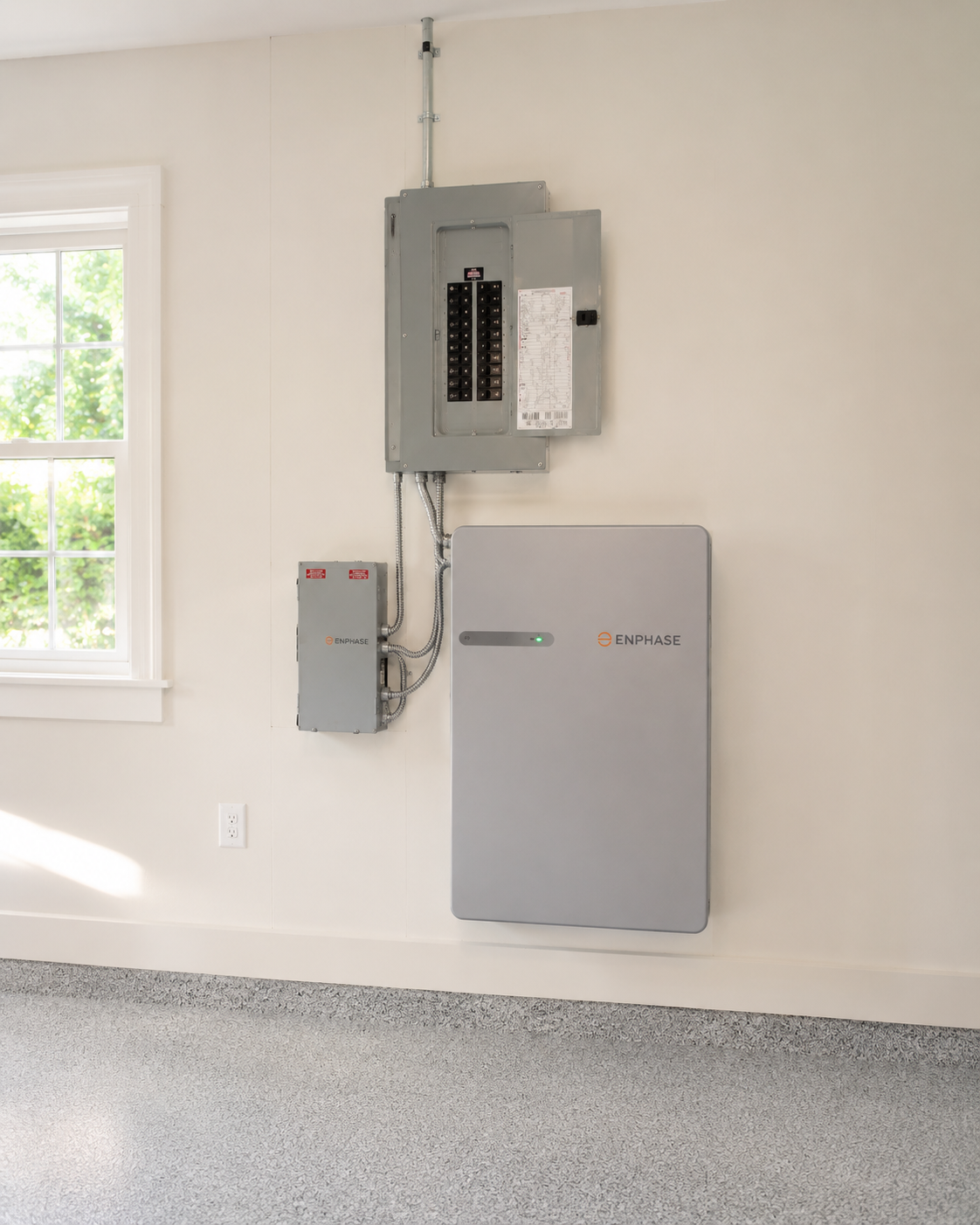
A wall-mounted residential battery storage system installed at a New Jersey home, clean utility install with conduit visible
Why now · New Jersey

Electric bills have climbed every year.

New Jersey residential electricity climbed from roughly 16.6¢/kWh in 2010 to ~21.5¢/kWh today, averaging about 1.7% per year. PJM capacity prices spiked in 2025, and JCP&L, PSE&G, and Atlantic City Electric supply rates all moved higher with the auction. The new GSESP rebate plus Sandy-grade resilience are the two reasons NJ homeowners are pulling the trigger now.

The hedge GSESP rebate + storm resilience
Get my report
New Jersey residential electric rate
2010–2025 · cents per kWh, all-in
$0 low mid high 2010 2015 2020 2025 US avg $0.169/kWh NJ all-in $0.215/kWh $0.166/kWh Your stored kWh (GSESP + self-consumption) value of every shifted kWh ¢/kWh, residential all-in
NJ residential rate Your stored kWh US national average
Source · EIA Form 861, residential class, 2010–2025. State averages and the US national line both pulled from the same dataset for an apples-to-apples comparison.
Major utilities coveredPSE&G, JCP&L, Atlantic City Electric, Rockland Electric
A real example · New Jersey

What a 13.5 kWh Powerwall earns when GSESP launches.

The BPU's June 2025 Order put the proposed Phase 2 distributed rebate at up to $400/kWh of usable capacity, the largest state battery incentive ever proposed. A typical 13.5 kWh Powerwall 3 would clear $5,400 in upfront cash, plus a performance-based adder for summer peak hours that the BPU is finalizing through 2026. Solar self-consumption on Successor Solar (SuSI) credits stacks on top.

See the pieces of the stack
01 · Why It Works Here

New Jersey is building the biggest battery program in the country.

The BPU approved Phase 1 of the Garden State Energy Storage Program in June 2025 and Phase 2 (distributed/residential) is in active rulemaking through 2026. The state target is 1 GW of behind-the-meter capacity by 2030. New Jersey is making the biggest financial commitment to residential battery storage of any state.

up to $400/kWh
GSESP proposed upfront rate
Block-style fixed rebate, plus performance-based adders for grid-services dispatch
$2B
Total program budget
Multi-year incentive pool funded by NJ ratepayer Societal Benefits Charge
1 GW
Behind-the-meter target
State goal by 2030, equivalent to ~75,000 typical home batteries
13.5 kWh
Powerwall 3 usable capacity
10 kW continuous AC output, stackable to multiple units, 10-year warranty
Get my report
02 · The Components

Every value line, spelled out.

A New Jersey home battery will earn three ways once GSESP Phase 2 launches: a block-style upfront rebate of up to $400/kWh, performance-based adders for summer peak dispatch, and ongoing solar self-consumption value paired with Successor Solar Incentive credits. Each line stands on its own. Stacked, they're the most ambitious residential battery economics in the country.

  • GSESP Phase 2 upfront rebate (proposed, BPU finalizing 2026)up to $400/kWh
  • Performance-based summer peak adder (under finalization)TBD per Order
  • Solar self-consumption boost (SuSI export ~85% of retail)~$300-400/yr
  • Resilience value (Sandy 2012, Ida 2021 storm exposure)$1-3K per major event
  • Total program budget (multi-year pool)$2 billion
  • Lease/PPA financing available, ITC passed through in paymentsno money down
  • Equipment lifespan and warranty10 yrs · 70% capacity
Get my report
03 · Install Timeline

From first call to GSESP block reservation.

A typical New Jersey battery install runs 8–12 weeks from first call to Permission to Operate. Once GSESP Phase 2 opens, block reservations are first-come-first-served on the proposed annual capacity schedule.

01.
Site survey & load study
In-home electrical assessment, panel inspection, NEC 705.12 calculation, GSESP eligibility confirmation. Designs the critical-loads backup panel for Atlantic/storm-prone areas.
Weeks 1-2
02.
Permits + JCP&L/PSE&G/ACE interconnection + GSESP application
Municipal building/electrical permit, utility interconnection application, GSESP block-priority application (once Phase 2 opens). Block priority starts when administrator receives the completed application.
Weeks 3-7
03.
Equipment procurement
Powerwall 3 (or Enphase IQ Battery, FranklinWH) ordered. Lead time 2-6 weeks depending on installer supply allocation. Often overlaps with permit work.
Weeks 4-9
04.
Installation & commissioning
Install is typically 1-2 days on-site. Commissioning enrolls the battery in the dispatch API once GSESP finalizes the performance-based adder structure. Backup test confirms real runtime.
Weeks 8-11
05.
GSESP rebate + standing by
BPU-administered upfront rebate paid after PTO. Performance-based adders pay out per BPU schedule once dispatch begins. Battery stands by for any outage (Atlantic coast storm season runs August through November).
Post-install
Get my report
04 · Honest FAQ

The real questions New Jersey homeowners ask.

Actual questions that come up in the first installer conversation, answered for a typical NJ homeowner in 2026.

When does GSESP Phase 2 actually open?

The BPU approved Phase 1 (front-of-the-meter grid-scale) in June 2025. Phase 2 (distributed, including residential behind-the-meter) is in active rulemaking with an expected launch during 2026. The actual incentive amounts and application schedule are being finalized in a follow-on Order. Installers can pre-position site assessments and permitting work to be first in line for block reservations when applications open.

What if I install before GSESP Phase 2 opens?

Some installers will tell you to wait, and that's a reasonable position to take if you can. But if your roof needs solar, your panel needs work, or you live somewhere Ida flooded, the resilience value alone often justifies the upfront cost. Lease/PPA structures pass the federal commercial ITC through to your payments either way, and a battery installed in 2025 is still eligible to enroll in the dispatch program once it opens.

Will my solar net metering still work with a battery?

Yes. New Jersey moved to the Successor Solar Incentive (SuSI) program for new solar projects, which pays a fixed SREC-II-style credit for solar production and a separate retail-rate credit for net exports. A battery doesn't change either, it just lets you self-consume more of your solar generation during the evening peak rather than export it. For homes on the lower export tier, that's more economically valuable than the export credit.

What did Sandy and Ida actually teach NJ homeowners about backup?

Sandy (October 2012) left over 2 million NJ customers without power for as long as two weeks along the Atlantic coast. Ida (September 2021) caused historic inland flooding and multi-day outages even far from the coast. The common lesson: portable generators run out of fuel within 48 hours because gas stations also lose power. A solar+battery system that keeps recharging from the sun doesn't have that problem.

If I'm doing SuSI solar, should I add a battery at the same time?

Almost always cheaper to add at install. The electrician is already there, the inverter is being sized, and certain hybrid inverters (Enphase, Tesla, SolarEdge) install much more cleanly when battery and panels are designed together. A paired install also makes both the SuSI solar incentive and the GSESP storage rebate available on a single project.

Which NJ utility territory matters for storage?

All three IOUs participate in GSESP equally (JCP&L, PSE&G, Atlantic City Electric). The differences are in interconnection processing speed and storm response history. ACE serves the Atlantic coast where Sandy and Ida hit hardest. PSE&G covers the densest urban core. JCP&L runs through the Pine Barrens and mountain north. Your Score reads your zip and weighs storm exposure accordingly.

Explore more

Other states and programs.

Looking for the same kind of program in another state, or a different program in yours? Tap any pill to jump.

See how storage fits your specific New Jersey home.

Your Home Efficiency Score sizes the right battery for your panel and bill, models the GSESP rebate on your address (once Phase 2 opens), runs the SuSI self-consumption math, and shows real backup runtime for your utility.

Get my report