Energy Storage in Maryland.

The Maryland Energy Administration's RCES Grant Program pays a 30% rebate plus a $5,000 home-battery bonus, stacked together. Maryland sits in PJM's most stressed corridor, summer thunderstorms and winter ice events knock BGE and Pepco out for hours every season. A battery is the cleanest way to keep the well pump, fridge, and lights on through it.

Get my report See the rate-hedge math
30%
RCES percent-of-project rebate
$5,000
Home-battery bonus
$2M
FY26 funding pool
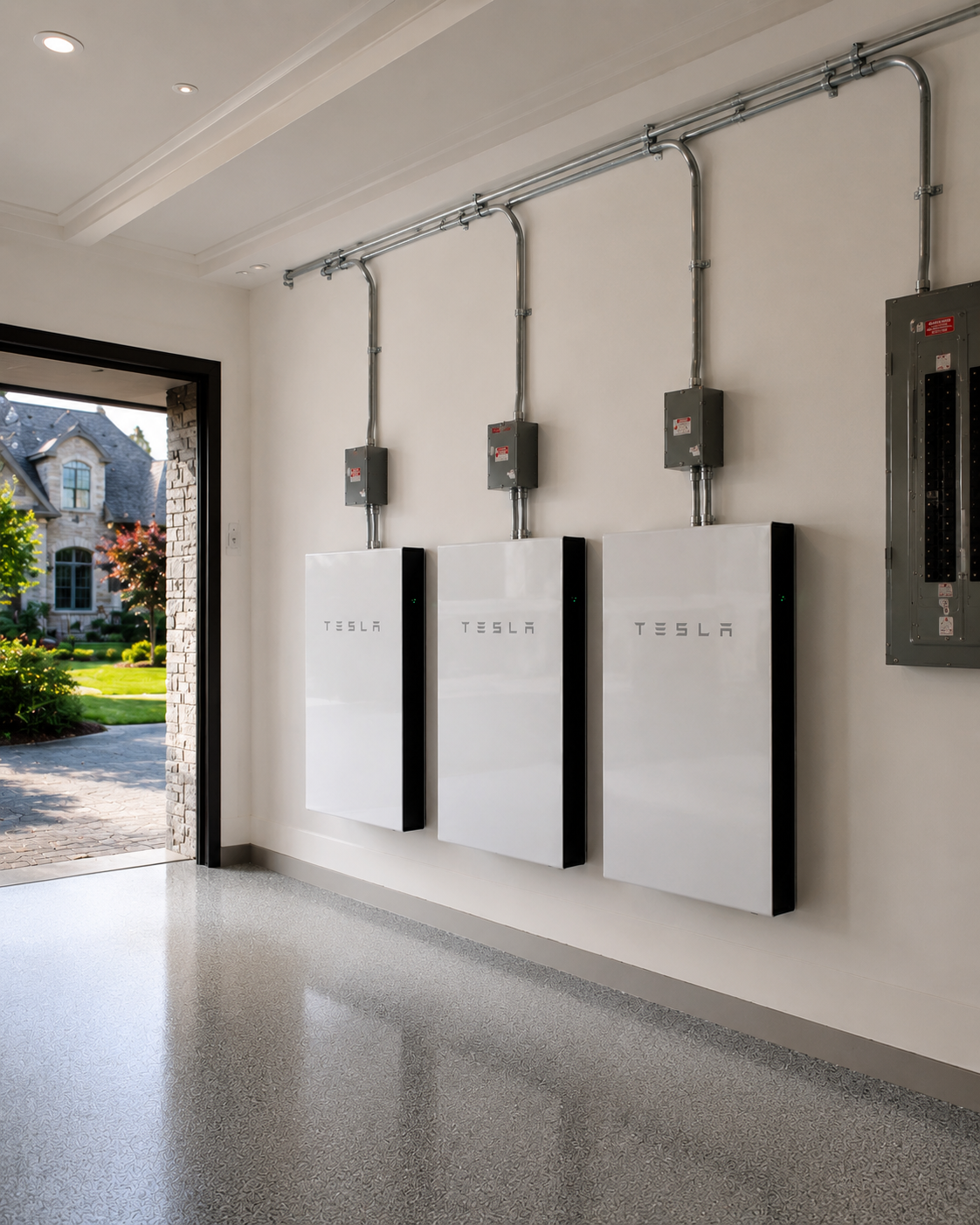
A wall-mounted residential battery storage system installed at a Maryland home, clean utility install with conduit visible
Why now · Maryland

Electric bills have climbed every year.

Maryland residential electricity climbed from roughly 14.6¢/kWh in 2010 to ~18.5¢/kWh today, averaging about 1.6% per year. BGE and Pepco both saw double-digit rate adjustments in early 2026 as PJM capacity prices spiked, and the MEA RCES grant is the cleanest way to offset the rising commodity charge with a battery that earns from solar self-consumption.

The hedge MEA RCES grant + storm resilience
Get my report
Maryland residential electric rate
2010–2025 · cents per kWh, all-in
$0 low mid high 2010 2015 2020 2025 US avg $0.169/kWh MD all-in $0.185/kWh $0.146/kWh Your stored kWh (RCES + self-consumption) value of every shifted kWh ¢/kWh, residential all-in
MD residential rate Your stored kWh US national average
Source · EIA Form 861, residential class, 2010–2025. State averages and the US national line both pulled from the same dataset for an apples-to-apples comparison.
Major utilities coveredBGE, Pepco, Delmarva Power, Potomac Edison, SMECO
A real example · Maryland

What a 13.5 kWh Powerwall earns on the MD stack.

Take a homeowner in Anne Arundel County who adds a Powerwall 3 to a paired solar install. RCES pays a 30% project rebate plus a $5,000 home-battery bonus, stacked together and capped by per-project terms and total program funding. The battery boosts solar self-consumption (BGE retail vs. avoided-cost export) and keeps essentials running through PJM's regular summer thunderstorm outages.

See the pieces of the stack
01 · Why It Works Here

Maryland pays both a percent and a flat bonus.

The MEA RCES Program is unusual: it pays a 30% project rebate and stacks a $5,000 home-battery bonus on top. That structure rewards smaller systems disproportionately, a typical 13.5 kWh Powerwall qualifies for a grant that covers a meaningful share of the project when both pieces apply. FY27 opens for new applications in summer 2026.

30%
Project rebate from MEA RCES
Counts battery, inverter, gateway, labor, and permits; paid as a grant
$5,000
Home-battery bonus
One-time flat add-on for residential installs, stacks with the 30% grant
$2M
FY26 funding pool
Strategic Energy Investment Fund (SEIF), first-come-first-served until exhausted
2 steps
RCES application process
Reservation Certificate issued before install; then post-install payment claim
Get my report
02 · The Components

Every value line, spelled out.

A Maryland home battery earns three ways at once: a percent-of-cost grant, a flat home-battery bonus, and ongoing solar self-consumption value against BGE/Pepco/Delmarva/Potomac Edison retail rates. Each line stands on its own. Stacked, the MD grant covers a meaningful share of system cost outright.

  • RCES grant, 30% project rebate~$4,800 typical
  • RCES home-battery bonus (residential only, one-time)$5,000
  • Solar self-consumption boost (~2,500 kWh shifted)~$420/yr
  • Resilience value (PJM corridor storm exposure)$500-1,500/yr
  • Total program funding (FY26, SEIF-backed)$2 million
  • Lease/PPA financing available, ITC passed through in paymentsno money down
  • Equipment lifespan and warranty10 yrs · 70% capacity
Get my report
03 · Install Timeline

From first call to RCES grant payment.

A typical Maryland battery install runs 8–12 weeks from first call to Permission to Operate. The RCES Reservation Certificate must be issued before the battery is installed.

01.
Site survey & RCES Reservation Certificate
In-home electrical assessment, panel inspection, NEC 705.12 calculation. Your installer files the RCES application through the MyMEA portal and waits for the Reservation Certificate before scheduling install.
Weeks 1-3
02.
Permits + BGE/Pepco/Delmarva/Potomac Edison interconnection
County building/electrical permit, utility interconnection application, batched with solar if applicable. Most MD counties issue battery permits within 3-4 weeks.
Weeks 3-6
03.
Equipment procurement
Powerwall 3 (or Enphase IQ Battery, FranklinWH) ordered. Lead time 2-6 weeks depending on installer supply allocation. Often overlaps with permit work.
Weeks 4-8
04.
Installation & commissioning
Install is typically 1-2 days on-site. Backup test confirms real runtime on your specific loads. Utility witness/PTO follows in 1-2 weeks.
Weeks 7-10
05.
RCES payment claim + standing by
Post-install payment claim filed through MyMEA with proof of install, inspection, and PTO. MEA processes the grant typically within 60 days. Battery stands by for any PJM-corridor outage.
Post-install
Get my report
04 · Honest FAQ

The real questions Maryland homeowners ask.

Actual questions that come up in the first installer conversation, answered for a typical MD homeowner in 2026.

When can I actually apply for the RCES grant?

The FY26 application portal closed once funding committed. The Maryland Energy Administration plans to reopen for FY27 applications in summer 2026 (typically July). The program runs first-come-first-served until funding is exhausted, so positioning your site assessment and permit work to be ready when the portal opens is the smart play. Your installer files the application on your behalf through the MyMEA portal.

Can I install before getting the Reservation Certificate?

No, and this is a hard rule. RCES requires the Reservation Certificate to be issued before the battery is installed. If you install first, you lose the grant entirely. Your installer should hold the install schedule until the certificate arrives, typically 30-60 days from application.

Does the $5,000 bonus apply on every install?

Per the FY26 RCES program rules, the $5,000 home-battery bonus is a one-time flat add-on for residential applicants. The 30% percent-of-cost grant applies to commercial installs as well, but only residential installs get the flat bonus. Verify current terms with your installer before signing, since FY27 rules may adjust.

How long do PJM thunderstorm outages actually last?

BGE and Pepco both publish reliability statistics. Most MD outages are under 6 hours, but the 95th-percentile event (the one most people remember) runs 12-36 hours for a typical neighborhood, longer for tree-canopied subdivisions and the Eastern Shore. A 13.5 kWh battery covers an essentials panel for that entire window. Sizing depends on whether you keep a heat pump or AC on backup.

If I'm doing solar through Maryland Solar Access, should I add a battery at the same time?

Almost always cheaper to add at install. The electrician is already there, the inverter is being sized, and certain hybrid inverters (Enphase, Tesla, SolarEdge) install much more cleanly when battery and panels are designed together. A paired install can also have the RCES filing and the MD Solar Access grant batched on the same MyMEA project, one set of inspections.

What's the difference between RCES and a tax credit?

RCES is a cash grant, not a tax credit. You don't need any specific tax liability to receive it, and the grant arrives as a check (or ACH) after MEA processes the post-install claim. The earlier MD Energy Storage Income Tax Credit Program ended at the close of 2024 and was replaced by RCES, which is more generous and cleaner to access.

Explore more

Other states and programs.

Looking for the same kind of program in another state, or a different program in yours? Tap any pill to jump.

See how storage fits your specific Maryland home.

Your Home Efficiency Score sizes the right battery for your panel and bill, models the RCES grant + bonus on your install, runs the solar self-consumption math, and shows real backup runtime based on your address and utility.

Get my report