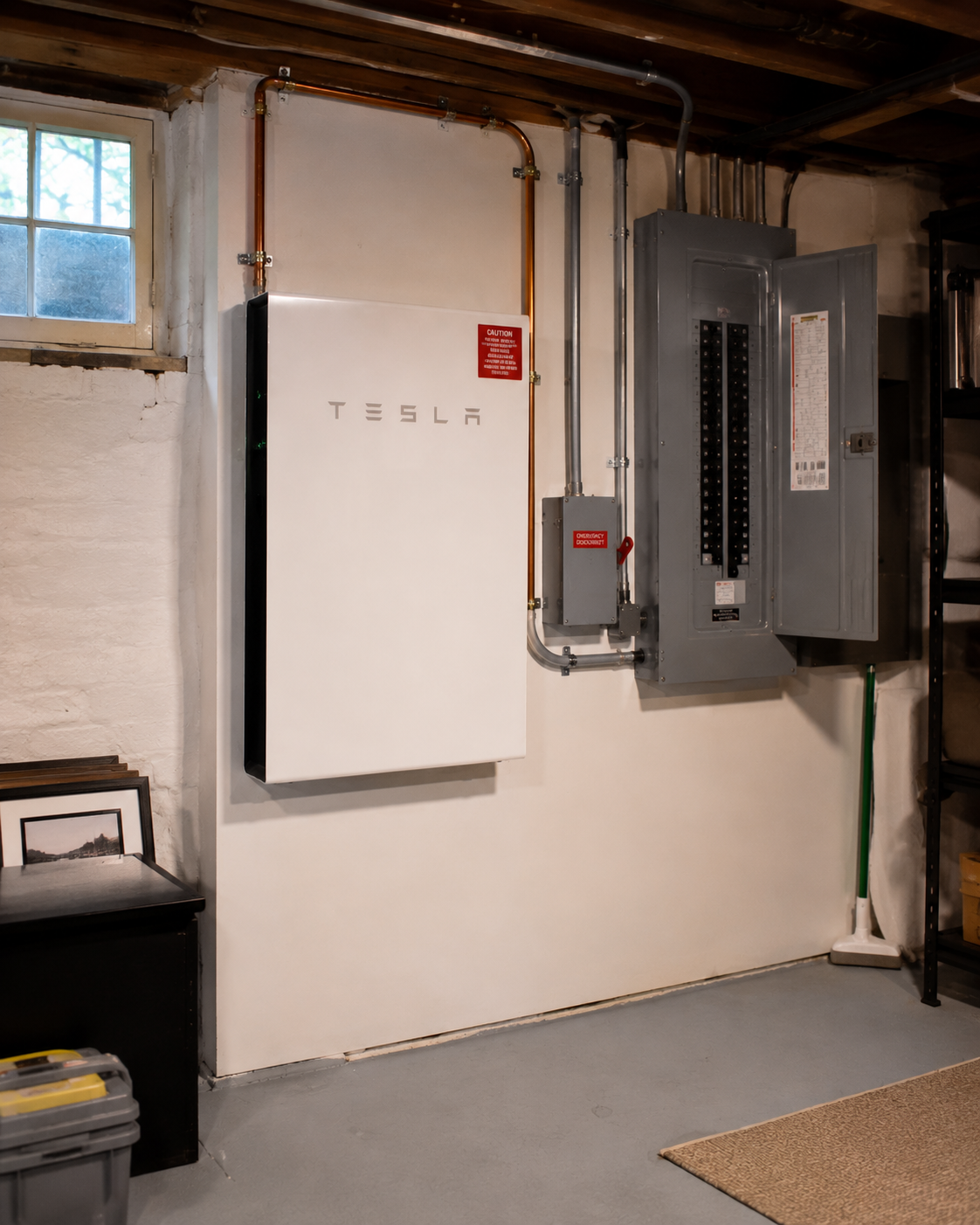
Highest residential electric rates in the continental U.S. A tree-canopy distribution grid that goes down every time a real storm rolls through. Half the state still heats with oil. A battery here is the most useful piece of equipment in the basement.

Connecticut residential electricity climbed from roughly 18¢/kWh in 2010 to 30.8¢/kWh today, averaging 3.5% per year. Highest all-in residential rate in the continental U.S. A battery in CT does two things at once: shaves your most expensive evening kWh, and earns $300/kW under the new Energy Storage Solutions program.
Connecticut's Energy Storage Solutions program runs on a 10-year performance-based structure: $300/kW in Years 1-5 (standard tier), $130/kW in Years 6-10. Underserved communities qualify at $450/kW; income-eligible homes at $550/kW. A 5 kW Powerwall 3 dispatch earns $1,500/year for the first five years, then carries on with a long tail of payments.
See the pieces of the stackTwo structural realities, the highest rates in the continental U.S. and a distribution grid that gets crushed by every real storm, make residential storage in Connecticut earn its keep faster than nearly anywhere else in New England.
Connecticut residential rates run roughly $0.30-$0.32 per kWh all-in as of early 2026, the highest in the continental United States, about 70% above the national average. Constrained natural gas pipelines, ISO-NE supply costs, and aging distribution drive a structurally elevated bill.
That makes the spread between cheap kWh and expensive kWh wider in CT than almost anywhere else. A battery that charges off-peak (or directly from solar) and discharges through your evening usage replaces some of the most expensive household electricity in the country.
Connecticut's distribution network runs through dense, mature tree canopy, beautiful for property values, brutal for power reliability. Hurricane Sandy (2012) knocked out more than 500,000 customers and over 15,000 outage locations across the state. Tropical Storm Henri, regular Nor'easters, and ice events drop power somewhere in CT every winter.
In 2024, U.S. utilities saw outage hours nearly double on the back of major weather events, Connecticut customers experienced roughly 9 hours per year of major-event outages. A battery turns that 9 hours into a non-event for everything that runs on a wall outlet.
Connecticut's Energy Storage Solutions program runs on a performance-based 10-year structure restructured by PURA in April 2026. Verified against the current ESS framework.
A typical Connecticut battery install runs 8–12 weeks from first call to Permission to Operate, with ESS activation following shortly after.
The questions that actually come up in the first installer conversation, answered straight, for a typical CT homeowner in 2026.
A 13.5 kWh battery wired to an essentials panel, fridge, well pump, oil burner blower, internet, a few outlets, covers about 24-36 hours of typical draw. Paired with a solar array, the battery recharges from the panels each day the storm clears, so multi-day outages stretch much further. For homes that lose power for 3+ days fairly regularly, two batteries (or a battery + solar) is the right sizing target.
Yes, and this is the single biggest reason oil-heated CT homes install storage. Your boiler doesn't need much electricity to run, but it needs some, the burner ignition, the circulator pumps, the thermostat. A battery keeps all of that powered. Without one, even a full oil tank doesn't heat your house when the power's out.
Yes. Battery payback is driven by the spread between your highest grid kWh and what storage costs. Connecticut's $0.30+ rates push that spread wider than nearly anywhere else in the country. A battery paired with solar self-consumption typically returns $700-$900/year in shifted-load savings alone, before counting any avoided generator costs or storm resilience.
Most CT installs size for essentials, fridge, well pump, heating-system electronics, internet, lights, and a few outlets, which one Powerwall-class battery handles. Whole-house backup (including AC, electric range, EV charging) typically requires two or three batteries plus an automatic transfer switch and load-shedding controls. The Score lays out both options with the cost delta.
Almost always, yes. AC-coupled batteries (like the Tesla Powerwall 3 or Enphase IQ Battery) bolt onto existing solar without replacing the original inverter. DC-coupled retrofits exist too but typically require more electrical work. A site visit determines the cleanest integration. Both options carry the commercial Section 48 ITC through to the homeowner if you finance via lease or PPA.
Eversource and UI offer optional residential time-of-use tariffs. The on-peak/off-peak spread isn't as steep as Massachusetts's, but on a CT bill, where every kWh is already expensive, even a moderate TOU spread translates to real annual dollars. The Score evaluates whether switching to TOU and adding storage is net-positive for your specific usage profile.
Looking for the same kind of program in another state, or a different program in yours? Tap any pill to jump.
Your Home Efficiency Score sizes the right battery for your panel and bill, models backup runtime against your essential loads, runs the rate-hedge math, and shows your real payback, based on your address and your actual utility.
Get my report