Florida runs two parallel utility worlds: the big investor-owned utilities (FPL, Duke Energy Florida, TECO) and the municipals (JEA, OUC, Lakeland). The IOUs all follow HB 741, the 2025 net-metering stepdown that drops residential export compensation from 75% of retail in 2024-2025 to 60% in 2026 and 50% by 2027-2028. The munis set their own export rates and most have already moved to avoided-cost. On the appliance side, heat pump rebates are modest (Florida is cooling-dominant), and the federal 25C/25D credits both expired Dec 31, 2025. Here's what each utility actually offers, in 2026.
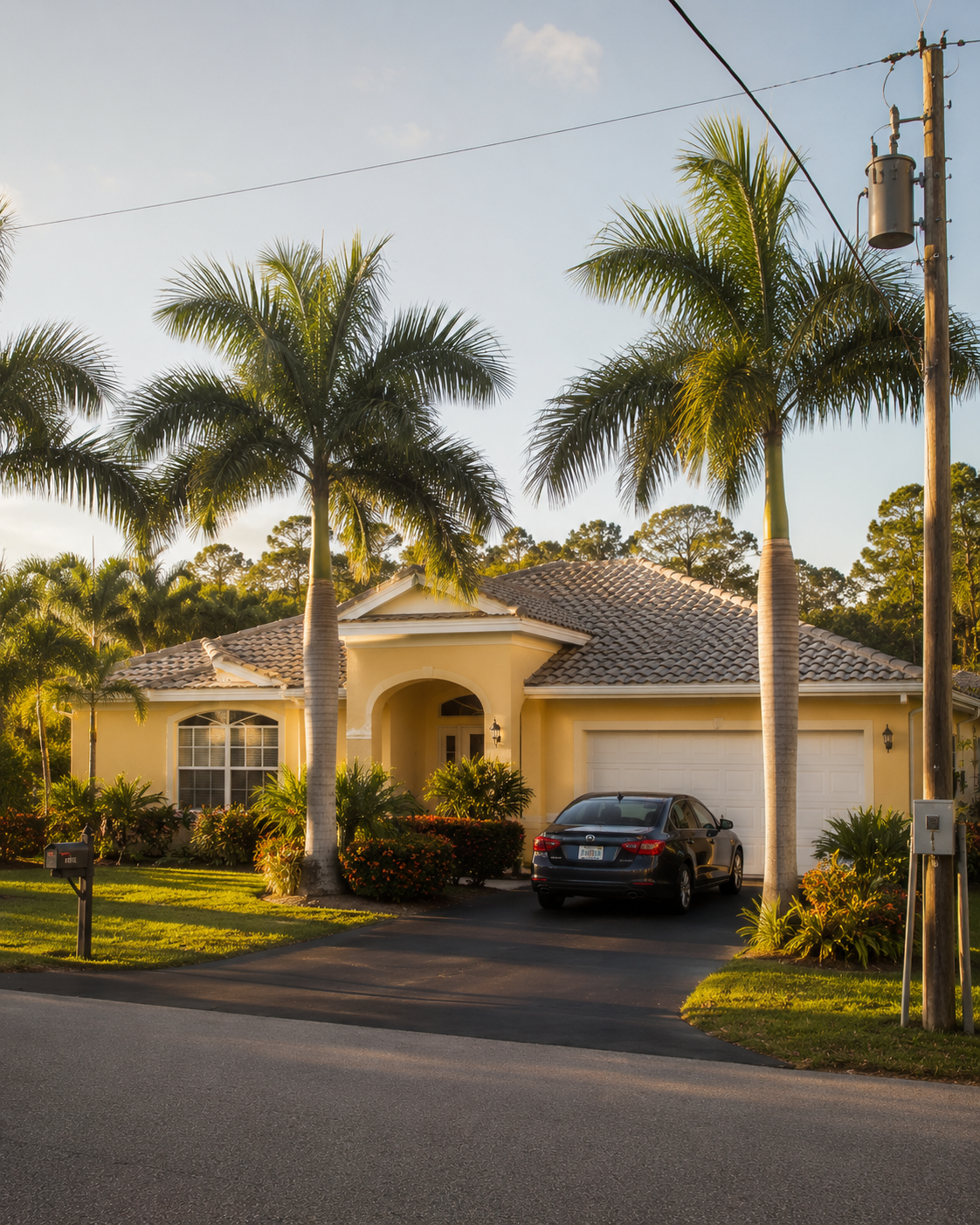
Customers approved in 2024-2025 receive 75% of retail rate for exports for the life of their interconnection. Enrollees in 2026 drop to 60% of retail. By 2027-2028 the rate falls to 50%. FPL, Duke Energy Florida, and TECO all follow the same statutory schedule. Munis (JEA, OUC, Lakeland) set their own export terms and most have already moved to avoided-cost compensation; OUC went to roughly 4.6 cents per kWh effective July 1, 2025 (from a retail rate around 11.8 cents). Two homes on the same street can have very different solar economics depending on the month they enrolled.
A read across the state. Each cell shows the program count by category. The ★ marks utilities with a flagship or unique program in that category, the ones worth a closer look.
| Utility | Heat pumps | Solar | Storage | Insulation | Windows |
|---|---|---|---|---|---|
| FPL Florida Power & Light | 3 | 3★ | 2 | 1 | |
| Duke Energy Florida | 3 | 1 | 1 | 1 | |
| Tampa Electric TECO | 2 | 2 | 1 | 1 | |
| JEA Jacksonville · municipal | 1 | 2 | 1★ | 1 | |
| OUC Orlando Utilities Commission ·… | 2 | 1 | 2 | 1 | 1 |
FPL is by far the largest utility in Florida, serving roughly 5.8 million customer accounts and around half of all Florida homes. As an investor-owned utility, FPL follows the HB 741 net-metering schedule. FPL also has a pending rate plan that would raise a typical 1,000 kWh bill from $134.14 to $151.99 by the end of the plan period.
Duke Energy Florida serves roughly 1.9 million customers across 35 counties in central and northern Florida (St. Petersburg through the I-4 corridor and the Big Bend region). Duke's HVAC rebate is the most generous on the Florida IOU side, and the PowerPair solar-plus-battery program may extend from North Carolina into FL on a pilot basis.
Tampa Electric (TECO) serves roughly 830,000 customers across the greater Tampa Bay area: Hillsborough County and parts of Polk, Pasco, and Pinellas. TECO's residential rebate stack is the leanest of the three Florida IOUs but follows the same statewide HB 741 schedule on the solar side.
JEA (originally Jacksonville Electric Authority) is a Duval County municipal utility serving roughly 510,000 electric customers, around 6% of Florida's load. As a muni, JEA sets its own rules and runs a richer utility-side rebate stack than the IOUs, including one of the most generous battery rebates in Florida; pair that with avoided-cost solar exports and JEA territory leans hard toward solar-plus-battery rather than solar-only.
OUC is a Central Florida municipal utility serving Orlando and parts of St. Cloud, around 250,000 electric customers. OUC moved to reduced solar exports (about 4.6 cents per kWh, well below the roughly 11.8 cents retail rate) effective July 1, 2025, while introducing a $2,000 battery rebate the same day. The new DemandLevel pricing tariff (early 2026) makes battery dispatch on peak windows directly relevant to monthly fixed charges.

FPL alone serves ~50% of Florida homes; the rest is Duke, TECO, JEA, OUC, and a handful of munis.
Your Home Efficiency Score figures out which Florida utility you're on, where you sit on the HB 741 stepdown schedule, and what your full stack looks like, IOU rules or muni rules, for your zip code, your roof, your bill.
Get my report